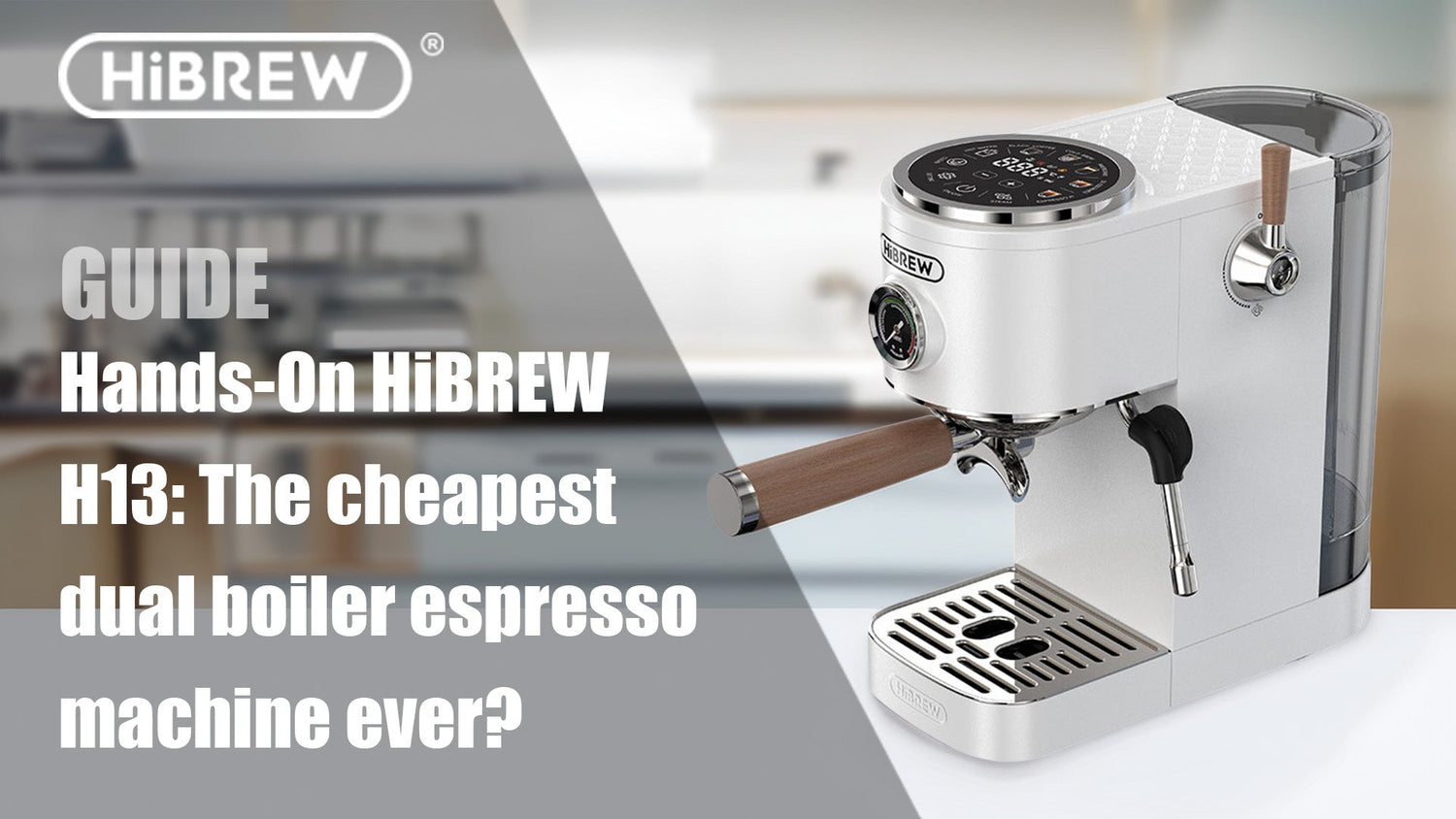
With the HiBREW H10A, the Chinese manufacturer has managed to cause a sensation even in the demanding home barista scene. Of course, this little machine isn't a replacement for Rocket, Lelit, or La Marzocco espresso machines. But even in our test, it proved itself a viable alternative to a DeLonghi Dedica Style or Sage Bambino Plus. Now the manufacturer is following up with the HiBREW H13, presenting one of the most affordable dual-boiler coffee machines to date. We've already had a chance to take a look at it.
- HiBREW H13
This is included in the HiBREW H13 package.
HiBREW apparently read our review of the H10A and offered us the H13 to test. I actually wanted the H21 right away , but for now, I'll just try the H13. It arrived very quickly in the typical red HiBREW box and was well packaged in styrofoam. Two things immediately stand out when unpacking: the slim design and the high-quality accessories.
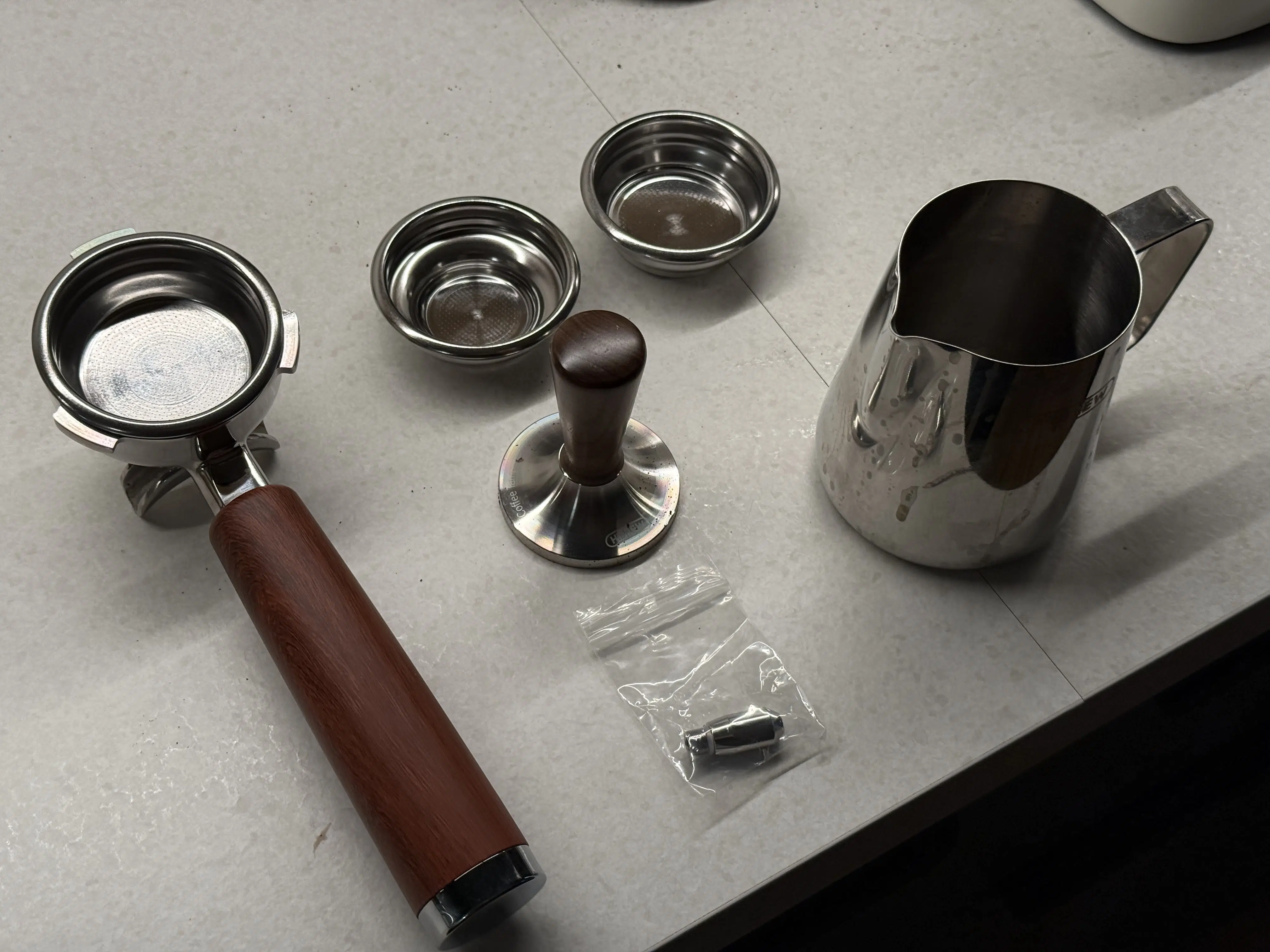
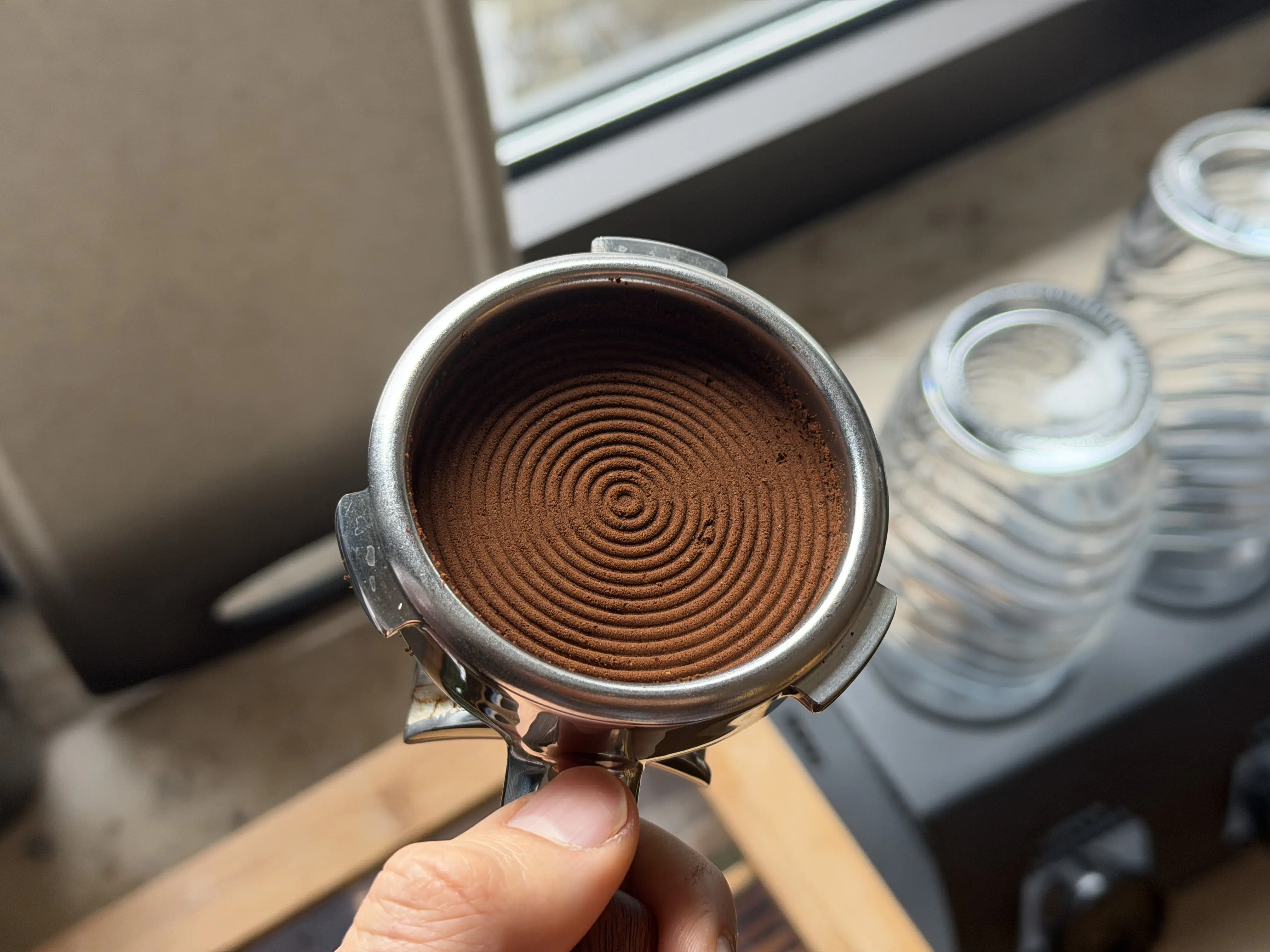
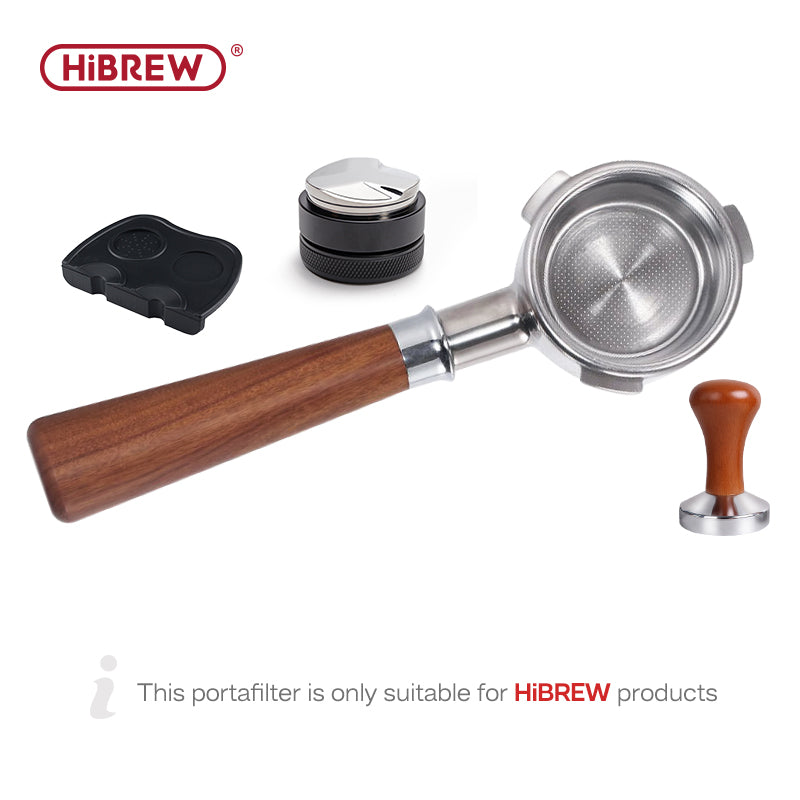
Once you've finally battled your way through the seemingly endless transparent plastic bags, you'll find a stainless steel milk pitcher, two extra filter baskets, a second steam wand nozzle, the 58mm portafilter with the filter basket already inserted, and a tamper. Both the portafilter and the tamper are my personal highlights. Not only do they each feature a walnut-look wooden handle , but they also have some weight to them. This isn't some flimsy plastic thing; it weighs in at around 535g. If someone told me this came with a €1,000 machine, I wouldn't have a single complaint. The tamper also has some weight to it and even features a rippled base. It looks cool and reminds me of my normcore tamper, but it doesn't actually make any difference.
Slim machine for small kitchens
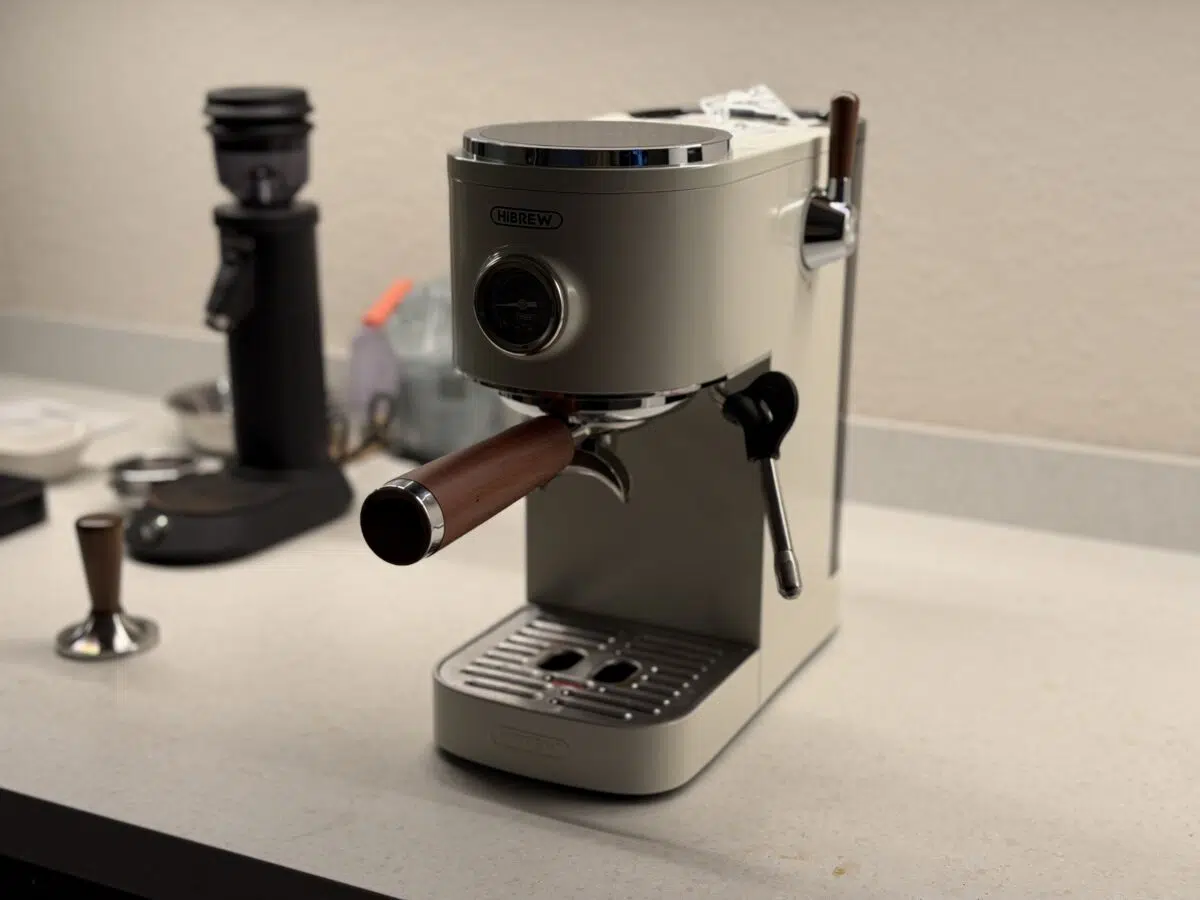
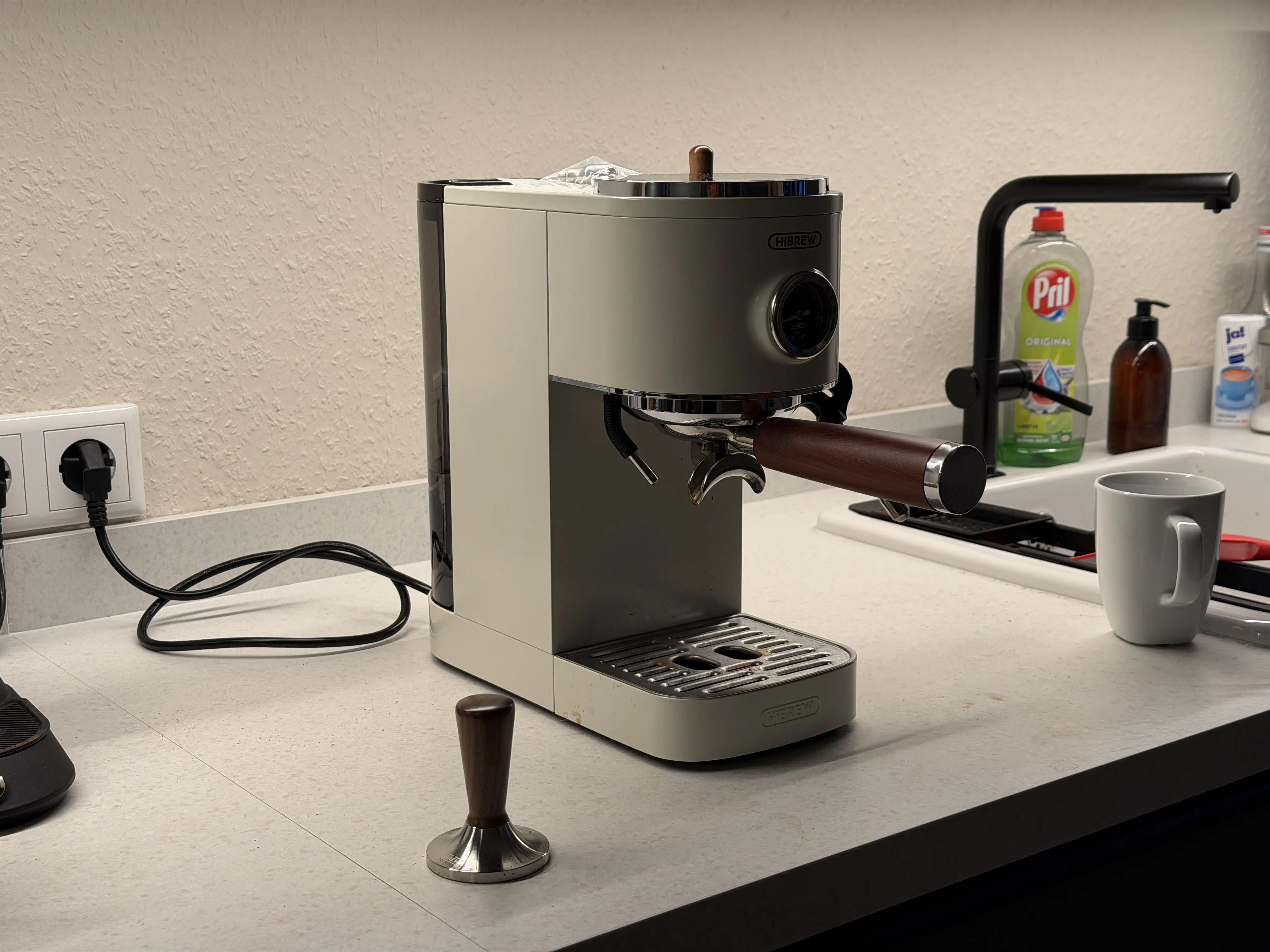
Let's be honest: a portafilter espresso machine should look cool, too. The stainless steel surfaces are on display in the home and, unlike some other kitchen appliances like air fryers, are practically never put away. The HiBREW H13 is available in silver, but also in cream white . We got the latter, and personally, I'm not a fan. It gives it a slight retro charm, if that's your thing. The wood-look finish on the portafilter, tamper, and steam valve are definitely highlights. There's also a pressure gauge on the front, like on many other machines.
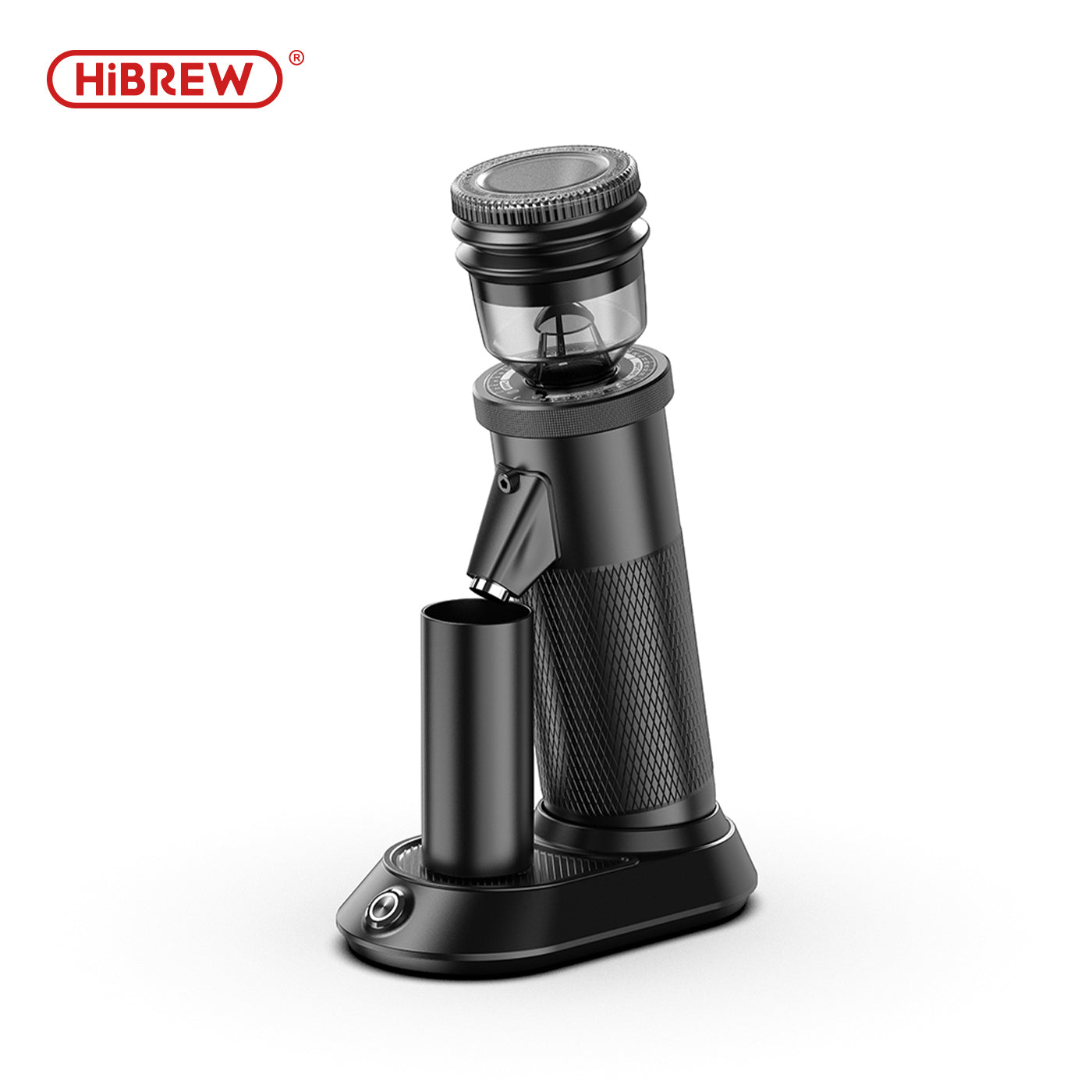
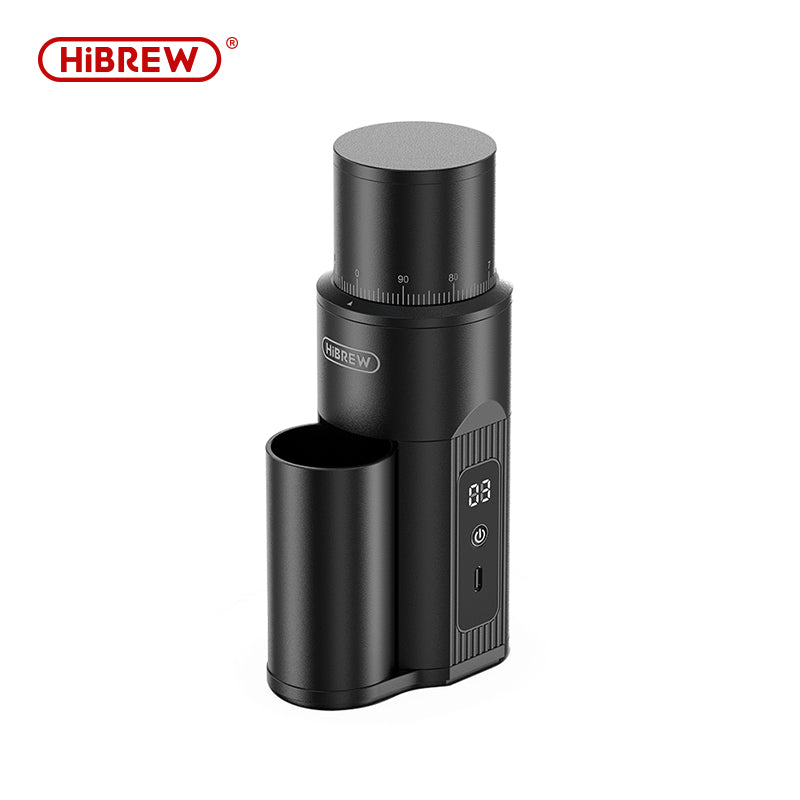
There are two aspects of its appearance that I find appealing. Firstly, the form factor is particularly practical for small kitchens . At 32 cm high, 32 cm deep, and 16 cm wide, it fits even in narrower kitchens. Of course, you also need to consider space for a coffee grinder. In our test setup, this task is handled by the HiBREW G5 , which we also used with the H10A.
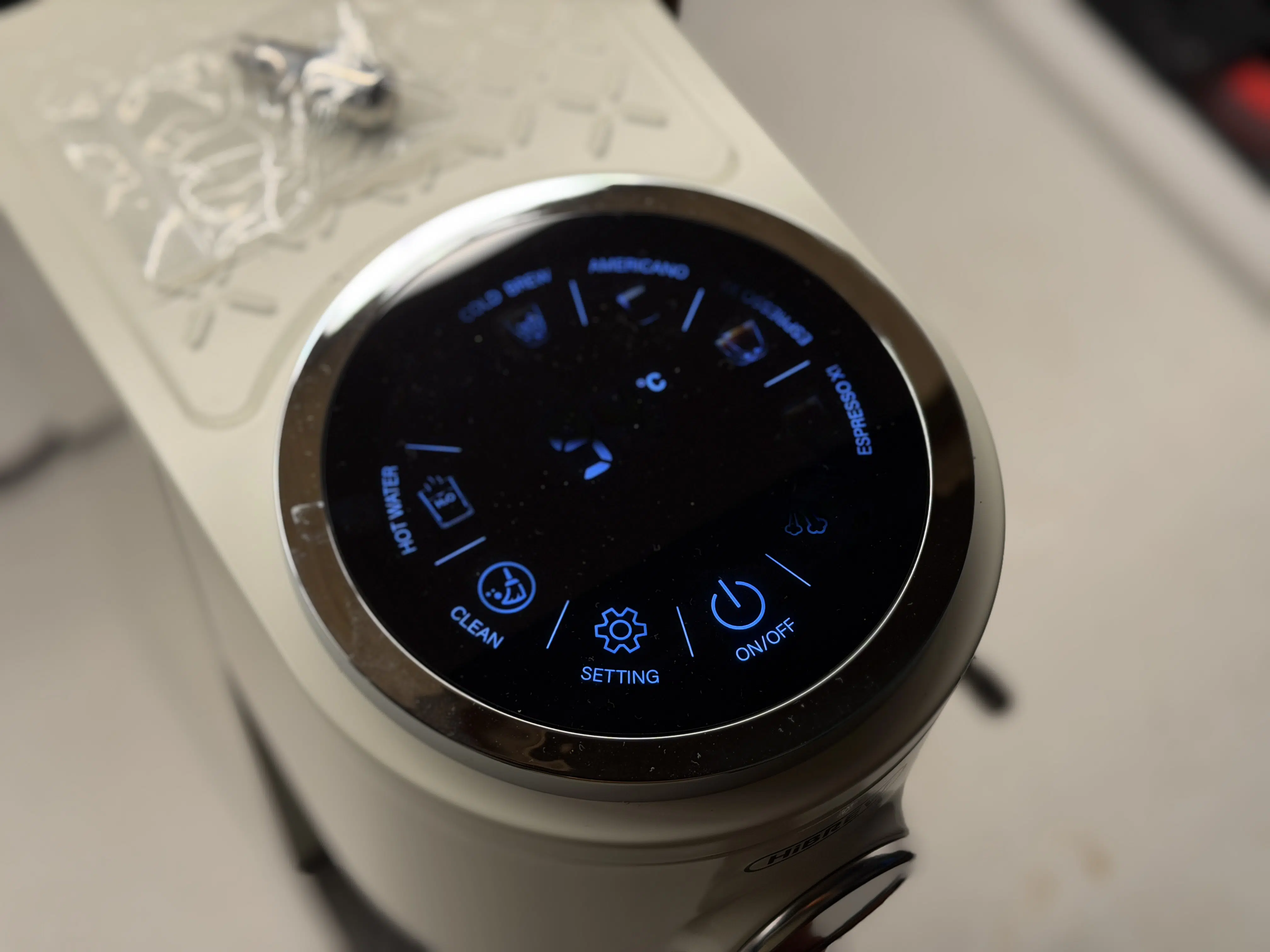
On the other hand, there's also the touchscreen on the top for operation . Compared to the cryptic button controls of my Sage Barista Express, for which I constantly have to consult the manual, this is an upgrade.
In my opinion, the machine's build quality is commensurate with the price. The housing is mostly made of plastic, not stainless steel. This results in a weight of 5.2 kg, which isn't enough to keep the machine stable when the portafilter is inserted. HiBREW's clever, but cheap, solution is suction cups! These certainly improve stability, but they don't exactly create a "premium" feel. The only truly negative aspect I noticed was the drip tray, which simply feels like cheap plastic.
The Chinese portafilter machine is supposed to be able to do that.
At the same time, the menu is a bit confusing for me. The HiBREW H13's display allows you to select a single espresso, double espresso, Americano, cold brew, black coffee, as well as hot water or a cleaning cycle. First off, kudos for that: a dedicated hot water dispenser isn't something you find on every machine, and the ability to easily start the cleaning cycle via the menu is also a plus for maintenance and the machine's longevity.
But for a double espresso, HiBREW specifies a fixed amount of 70 ml. That's confusing . According to a classic espresso recipe, with a 2:1 ratio of 18 g of beans, you get about 36 g of espresso in the cup. That's closer to the 35 ml of a single espresso. How does HiBREW arrive at these figures? And how are you supposed to get "black coffee" from a portafilter machine? According to the "mathematics" behind it, it's simply an Americano with a double shot – you obviously can't make filter coffee with it. It feels like they're trying to imitate the Ninja Luxe Café Premier , which is significantly more automated. But: You do get an Americano at the push of a button, since the espresso is extracted first and then the hot water is added.
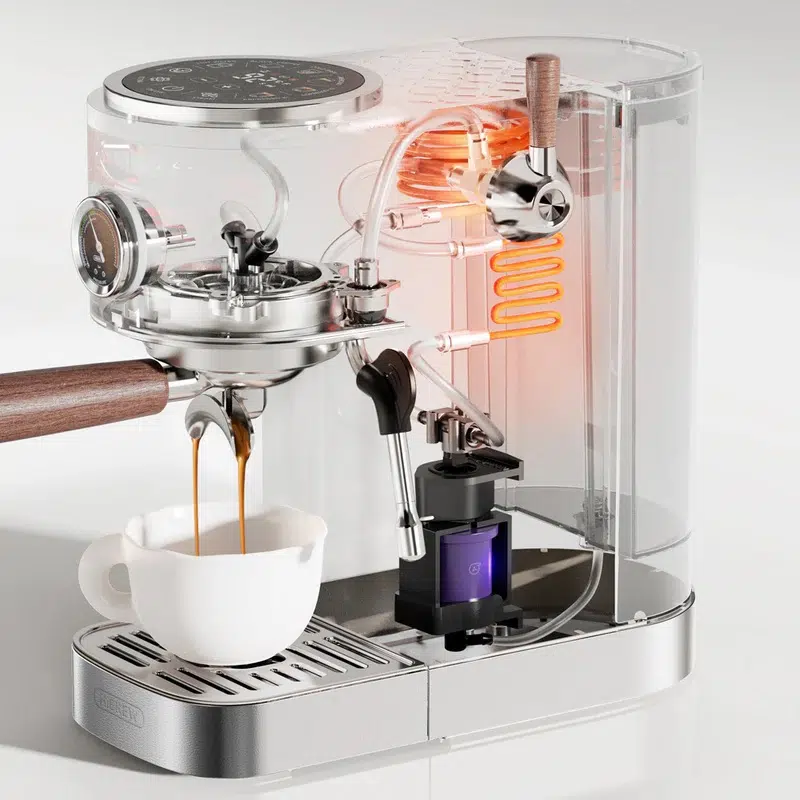
According to the manufacturer, the special feature of the HiBREW H13 is its dual boiler system . Most inexpensive espresso machines use a thermoblock that heats up quickly, but then only allows, for example, brewing espresso or using the steam wand. With my Sage Barista Express, for instance, I have to wait until my espresso has finished brewing and the thermoblock has heated up enough to froth milk. The more affordable HiBREW H13 actually allows both simultaneously: I can froth milk while the espresso is brewing . This saves time and is something you'd pay almost €1,000 for, even with Sage.
This is how to make coffee with the HiBREW H13
The machine has a power output of 2100W, and the manufacturer specifies an extraction pressure of 9 bar. This is a realistic value, unlike previous models from the same manufacturer which claimed 20 bar, a pressure unnecessary for espresso preparation. This is because it also has an internal expansion valve (OPV) that returns excess water to the water tank. The machine heats up in under 5 minutes , which makes me somewhat skeptical, as even very expensive dual-boiler machines take considerably longer.
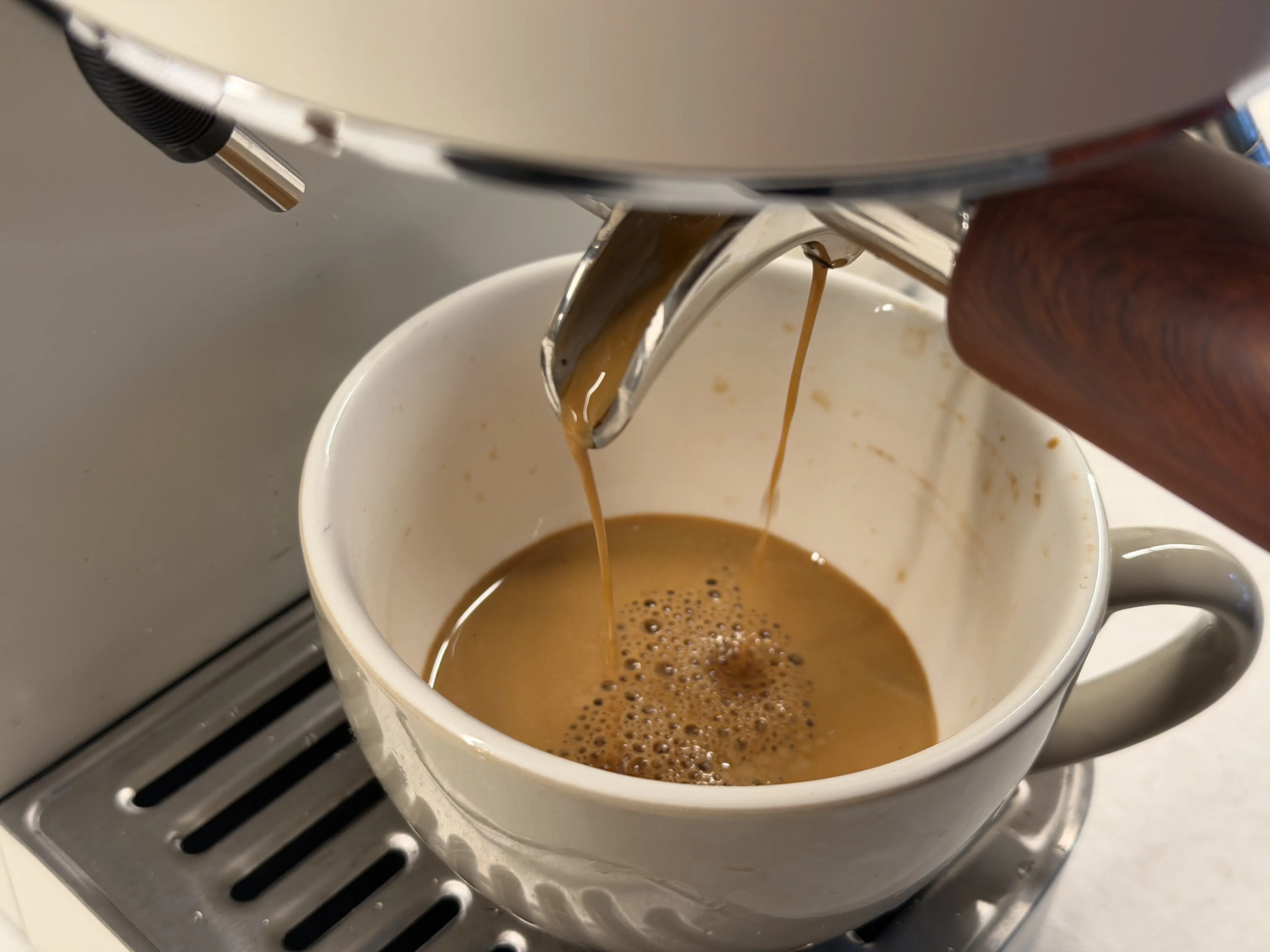
So, I weighed out the coffee beans (18g), tamped them with the included tamper, locked in the portafilter, and then clicked on the double shot button. The 70ml display still confuses me, but hey, the first shot, while a bit fast, at least went through. I then adjusted the temperature from 92°C to 94°C, which was super easy thanks to the display. You can also adjust the pre-infusion here, which is set to 5 seconds by default. With my current settings, the machine takes a good twelve seconds for the espresso to flow through the double spout . I find the shot timer display handy; theoretically, it eliminates the need for a scale with a timer.
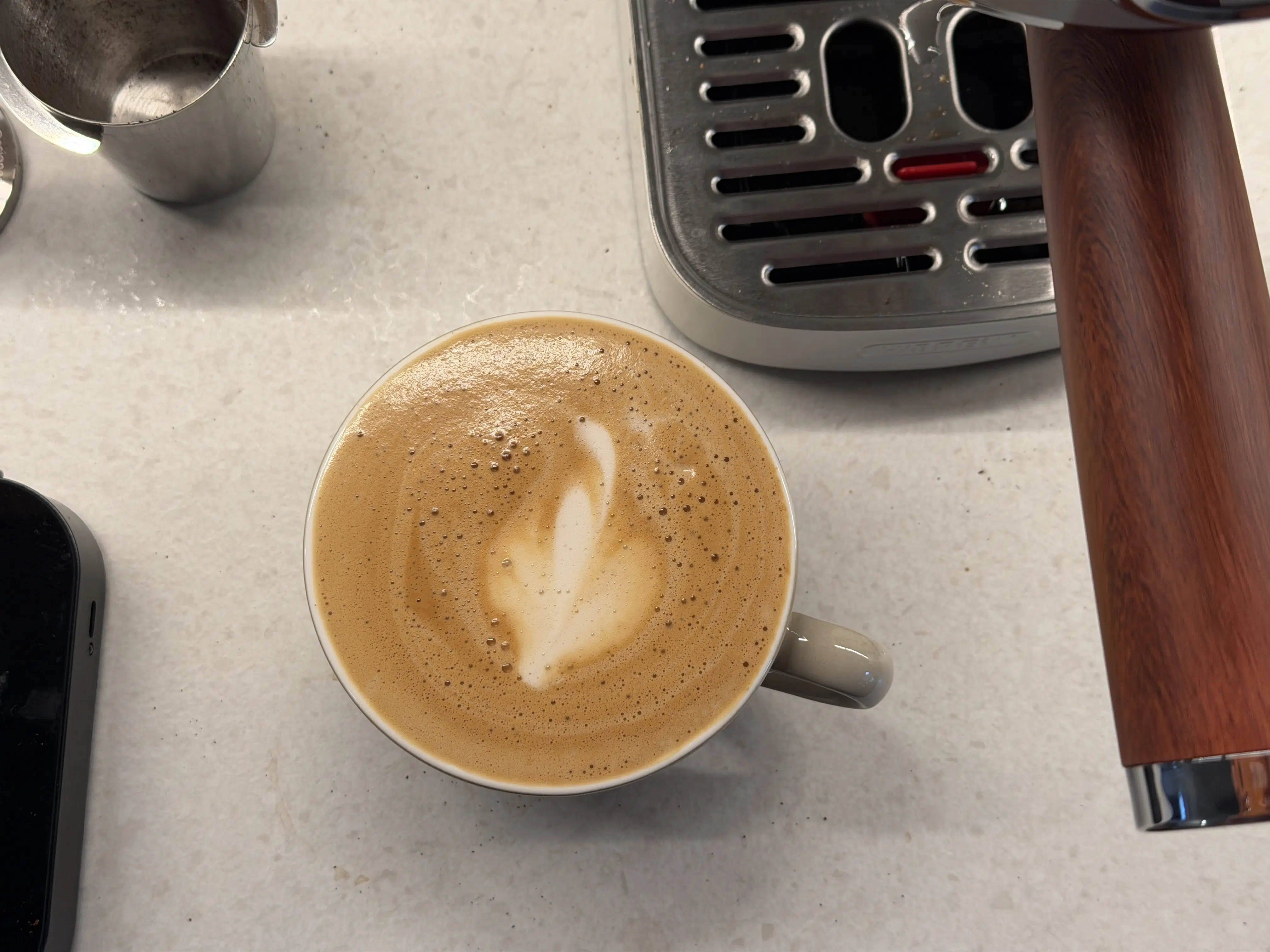
Frothing milk with the steam wand also works quite well. Unlike my Sage Barista Express, the nozzle heats up quickly, and you can froth milk almost immediately. The wand is a bit short, and the swivel range is somewhat limited, but I still find it satisfactory. The product page suggests that you can adjust the milk temperature, but I couldn't find a corresponding setting. It takes about 45 seconds for the milk to get really hot. If you have some experience with milk frothing, I would recommend screwing on the nozzle with three holes; I found the milk foam to be slightly better with that setting.
Buy HiBREW H13?
I'd like to emphasize again that I'm not a trained barista and have no experience in the food service industry. Over the last two years, as is typical for someone in their early 30s, I've immersed myself in the world of home baristas. I use my Sage Barista Express, have tried out some cheap Chinese espresso machines, and have occasionally used better machines at friends' houses.
I prefer the handling of the HiBREW H13 to the H10A , though not its appearance. That's certainly a matter of taste, but I achieved satisfactory results more quickly with the H13. A good grinder would be the appropriate upgrade here; the G5 from our test setup is, in my opinion, a bit too inconsistent. For those wanting to get into home baristaying, this is, in my view, a better alternative to the DeLonghi Dedica Style . The Dedica requires upgrades like a better portafilter/filter and tamper, which brings the price up to the H13. But then you also get this dual-boiler system, a touchscreen, and the higher-quality look with wooden handles.
If you're really looking for the cheapest possible setup, you should start with a hand grinder, but I can't think of a better home barista setup under €300. Can you?
![Found a gem [G5mini] — a coffee grinder that fits right into your commute bag. Compact, portable, yet powerful.](http://www.hibrew.com/cdn/shop/articles/20260411151107_151_29_85d1041a-2e0e-44ff-9e86-cf61c767ac68.jpg?v=1775893982&width=1920)


Leave a comment
All comments are moderated before being published.
This site is protected by hCaptcha and the hCaptcha Privacy Policy and Terms of Service apply.